News 📣
- 10/2026 Presentation at FMA in FL
- 5/2026 Poster at Boulder Summer Conference on Consumer Financial Decision Making in CO
Download:
Abstract:
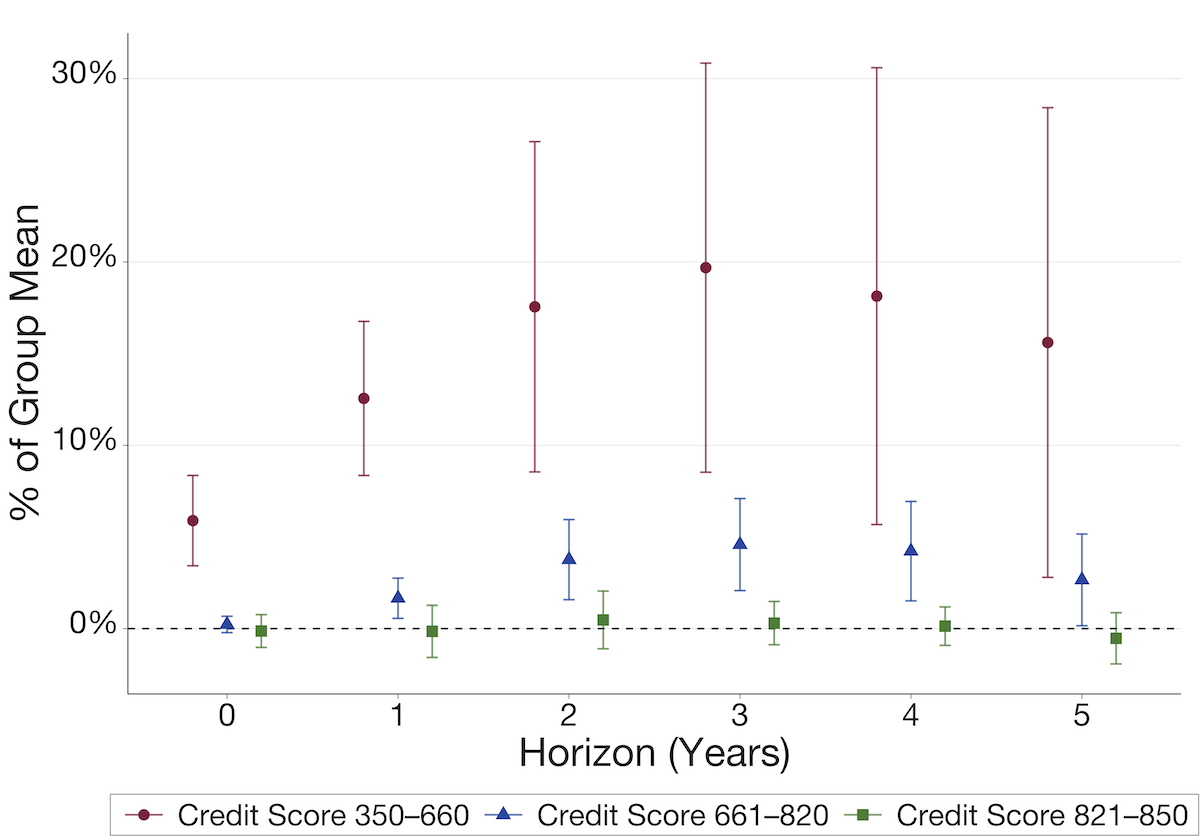
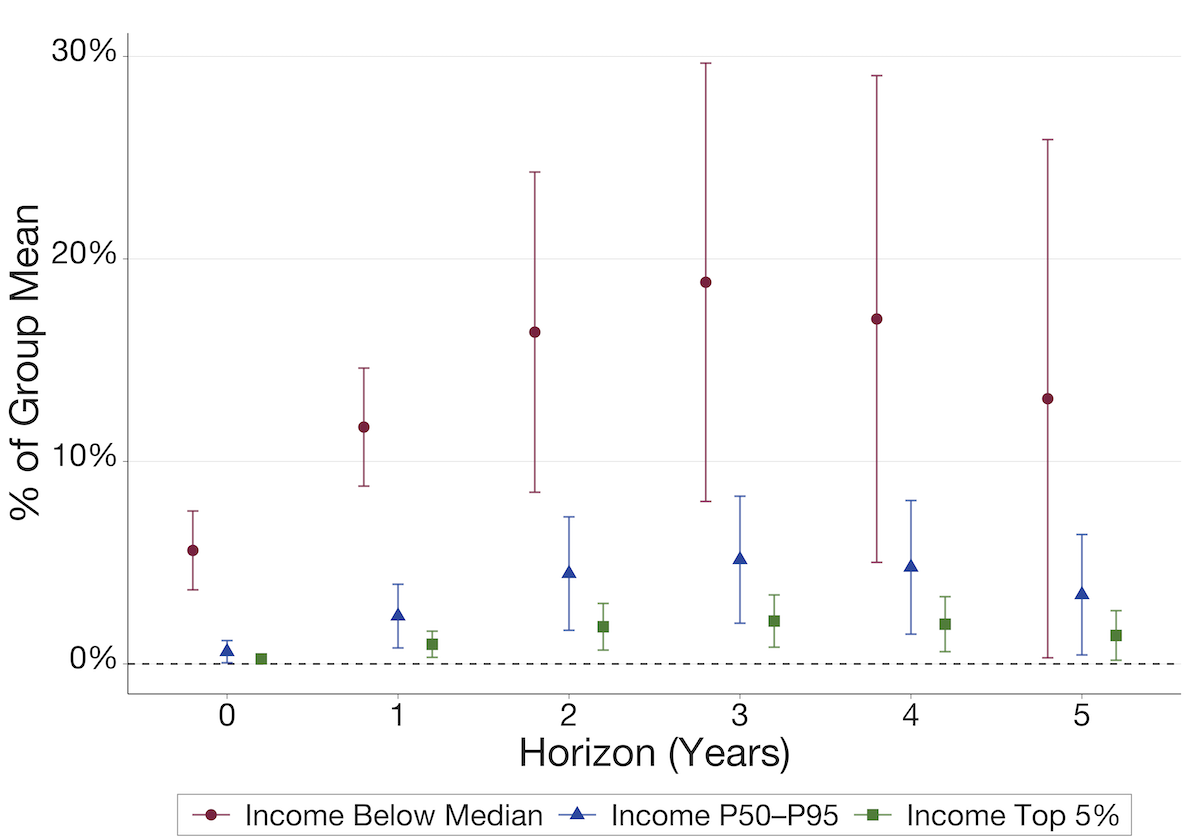
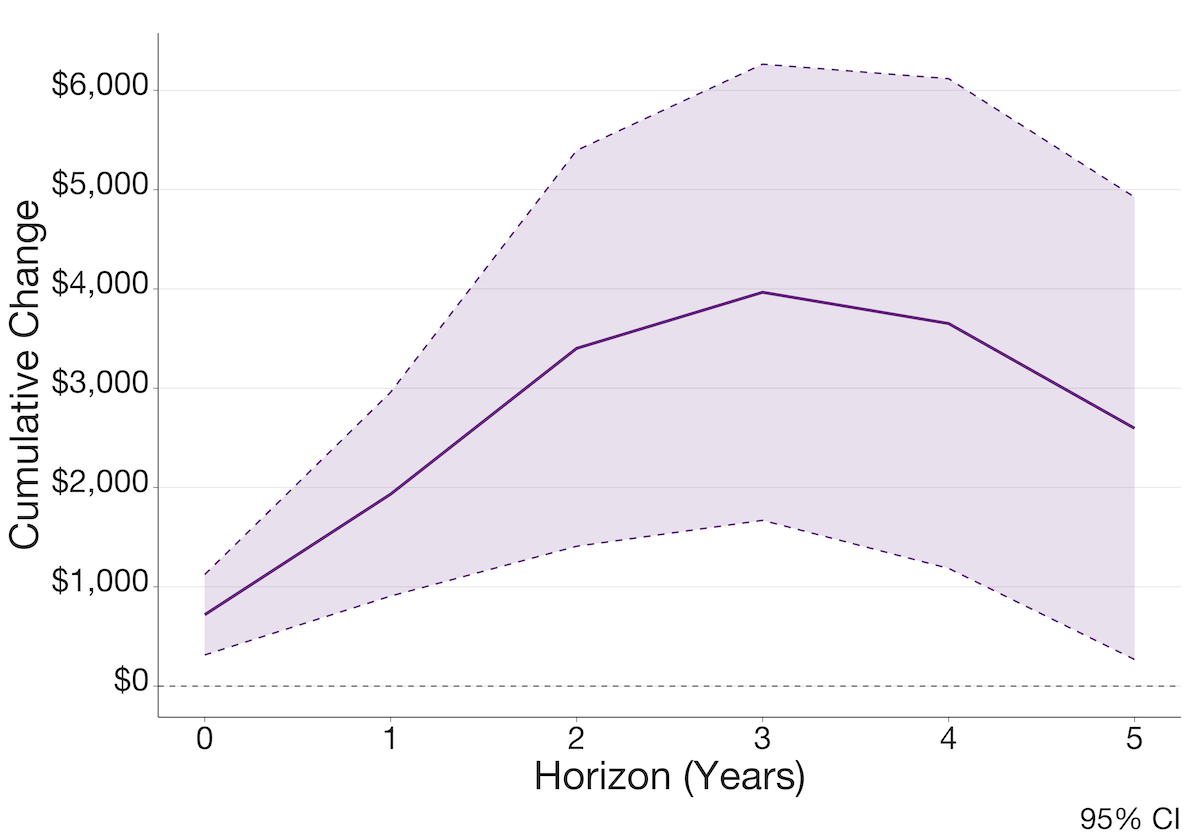
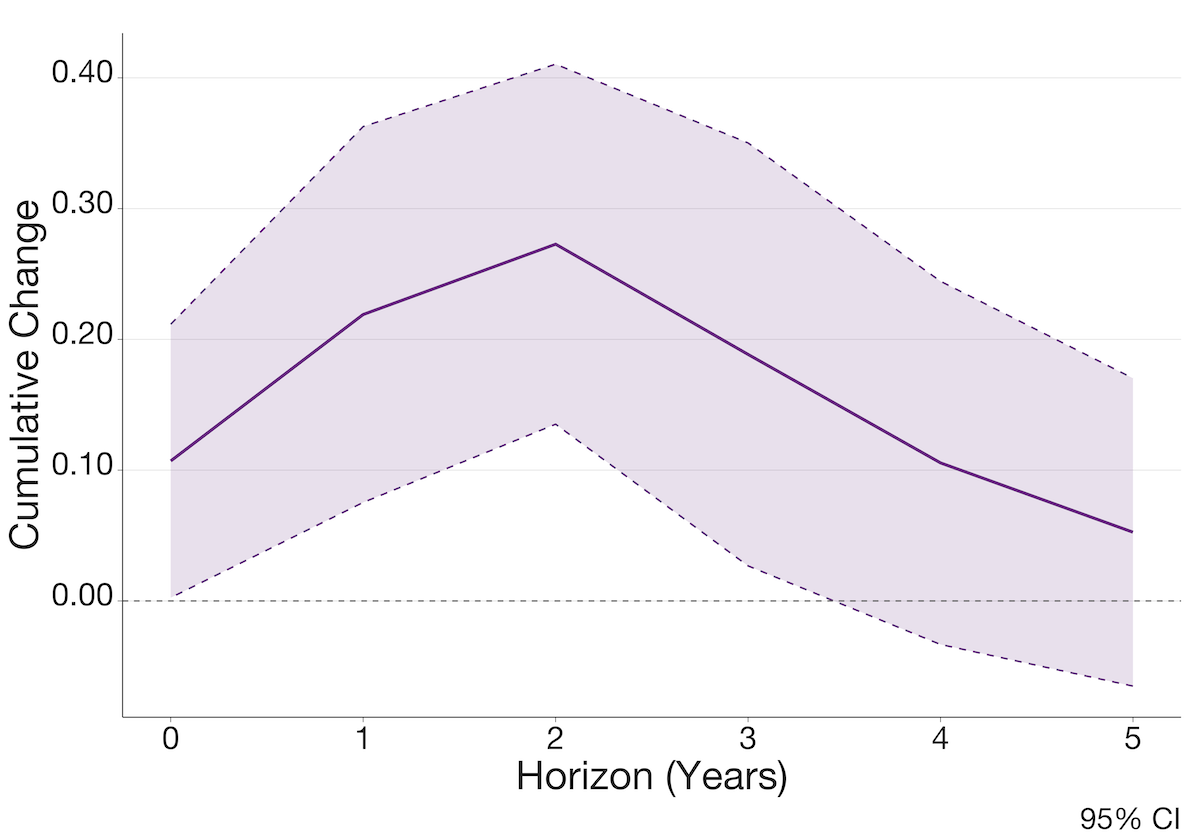
What happens to consumer borrowing when interest rates rise? Using a representative panel of consumer credit records and individual-level local projections, we show that contractionary monetary policy increases rather than reduces household debt. A 1 s.d. contractionary shock raises total debt by $3,967, or 7%, over three years. On the extensive margin, the number of credit accounts also increases in response to a contractionary shock. The effect is stronger and more persistent for financially constrained consumers. Mechanism evidence is consistent with an indirect channel: tighter policy weakens labor markets and household income, increasing reliance on credit among exposed borrowers. Our findings highlight an important distributional dimension of monetary transmission, as tightening raises indebtedness among vulnerable households.
Intensive margin: IRF of Total Debt Balance
Extensive margin: IRF of Credit Account
Heterogeneous IRF of Total Debt Balance